
Walk an Iowa City Street
A useful Iowa City street directory search moves from an address to a stable parcel key, then from that key to names and dated records. Start with the physical address in the Iowa City Assessor search. Keep the parcel number, legal description, and any deed-holder name together. Johnson County’s Property Information Viewer, or PIV, then confirms where the parcel sits and which lot the address represents.
Ownership is not occupancy. A deed identifies parties to a transfer, while a directory or lawful voter confirmation may place a person at an address. Follow this order:
- Enter the house number and street in the city assessor form. Save the parcel number and legal description.
- Open the same address in PIV. Check the parcel outline, popup, and nearby address points.
- Use the owner as a grantee name in the Recorder index. Match the legal description before accepting a deed.
- When full identifying details are known, use Iowa’s voter lookup to confirm registration. It is not a street list.
- For an older occupant, use a numerical householder directory and check its alphabetical entry.
Iowa City Street Search Fields
The Iowa City Assessor Parcel Search is the best first stop for an address inside city limits. Its public form has no visible owner-name or ZIP field. House number, street name, parcel number, and legal description are the practical keys. Too many filters can hide a valid result, so begin with little detail.
| Control | Input | Street use |
|---|---|---|
| Parcel filter | All or photos only | Keep all unless an image is needed |
| Parcel number | Text, % wildcard | Reopen a known parcel |
| Physical address | House and street | Find one site or a whole street |
| City streets only | Checkbox | Restrict the street list |
| Legal description | Text | Bridge an old address |
| Lot area | Min and max acres | Narrow by size |
A parcel report may show a deed holder, tax mailing address, value, class, photo, and improvements. None proves every person lives there. The street directory remains a trail, not a household census.
Iowa City Records by Street
Several Iowa City records accept an address, street, parcel, or legal description. Their scope and meaning differ. Keep each source date visible.
| Source | Keeper | What it shows | Access |
|---|---|---|---|
| Parcel card | Iowa City Assessor | Site, deed holder, PIN, value | Public web form |
| GIS parcel | Johnson County GIS | Shape, popup, layers | PIV viewer |
| Tax ownership | County Auditor | Current tax owner, plats, aerials | Maps and office |
| Recorded instrument | County Recorder | Grantor, grantee, deed, lien, plat | Cott and Iowa Land Records |
| Permit or case | Iowa City NDS | Project, status, inspection | EnerGov or Chapter 22 request |
| Householder entry | ICPL and archives | Listed name at an address | Scans and library holdings |
The Treasurer adds tax payment and tax-sale context. The Auditor supplies current ownership for tax purposes. Neither is an occupant list.
Map Iowa City Street Parcels
The Johnson County PIV accepts parcel numbers or addresses, including partial searches. A street-only query can return site addresses containing that name. Click a result to zoom. If an address point lacks parcel detail, click the parcel itself. Layers include aerials, flood hazards, zoning, voting, parks, subdivisions, and cemeteries.
Enhanced Search permits graphic selection and a spatial buffer. Its table can sort records and export selected attributes to CSV. That makes block comparison possible without claiming each mapped owner lives there. The source screenshot shows the county’s Real Estate Division resources.
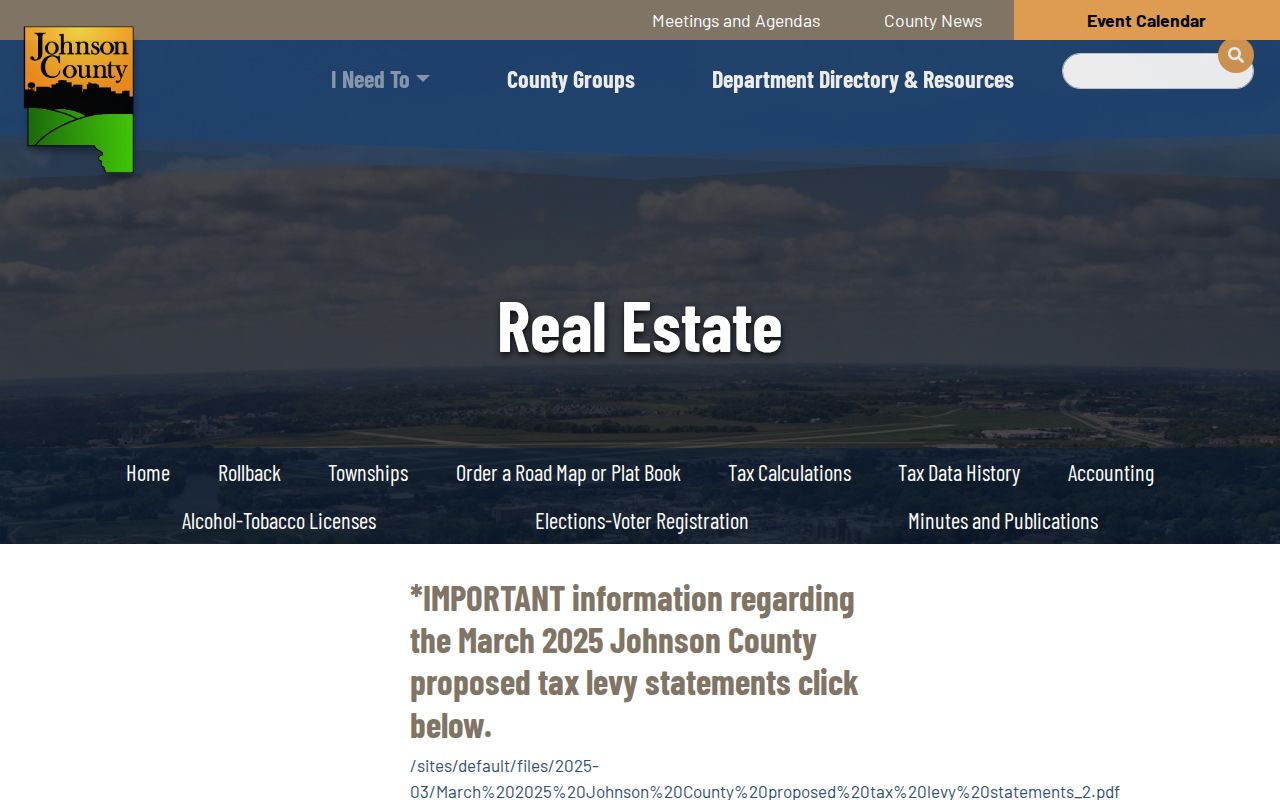
The Auditor’s ownership maps provide a useful check on the city parcel result.
Iowa City Deeds Along Streets
Assessment is not title. The Recorder keeps instruments that document a transfer, mortgage, lien, release, assignment, covenant, or plat. Local images begin in January 1840, but the local name index begins in November 1983. An old image can exist even when a name search cannot reach it.
The Recorder search instructions explain coverage and special searches.
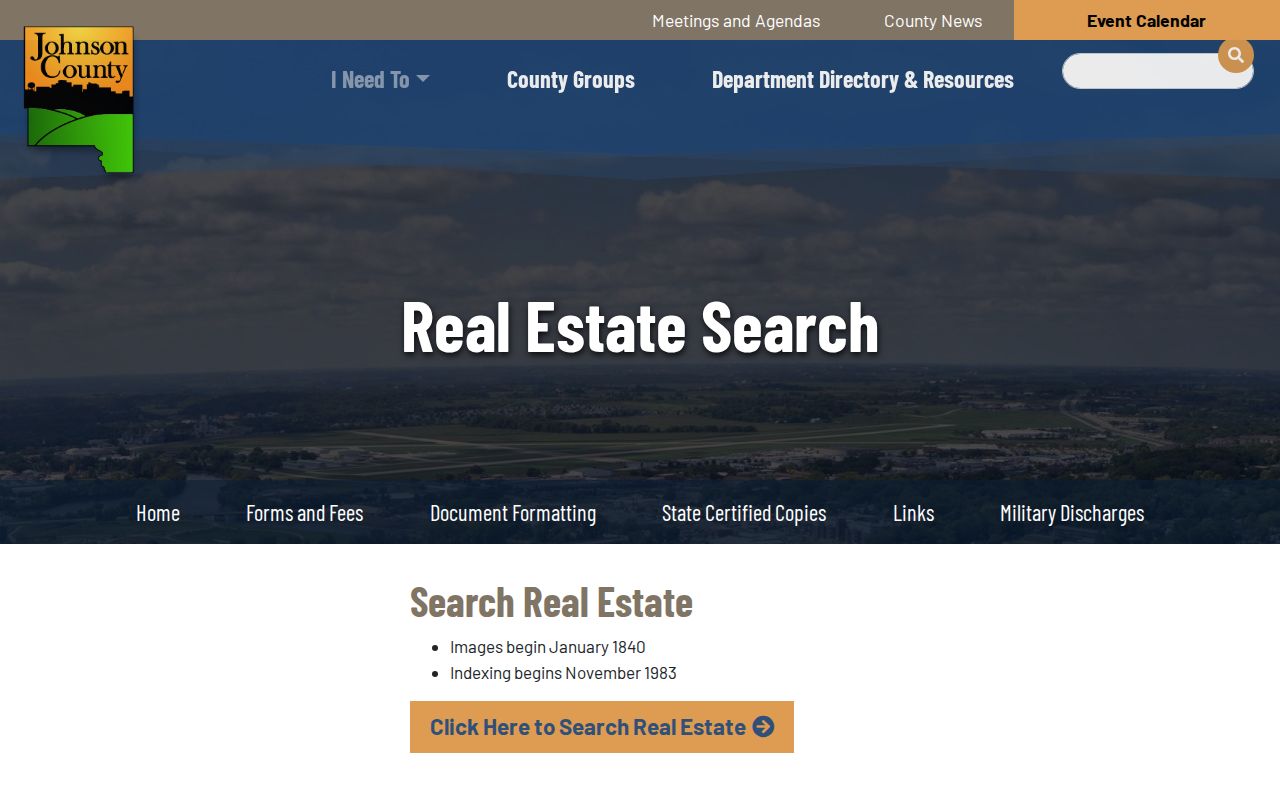
For early work, bring the legal description and likely party or book information to the Recorder, or use Iowa Land Records Search 2.0.
Index tip. Releases and assignments before May 5, 2003 may not link, so inspect marginal image notes and search each party.
Iowa City Street Record Terms
Four terms keep an Iowa City street directory search on course. They distinguish a place from the record describing it.
- Parcel
- A mapped unit of land with its own number.
- Situs address
- The physical site, which may differ from the owner’s mailing address.
- Plat
- A recorded map defining lots, blocks, roads, and phases.
- Criss-cross directory
- A directory arranged by street and house number.
A legal description may use lot and block, section-township-range, or metes and bounds. It is the best bridge when a street name or number has changed.
Iowa City Address Division Lines
Iowa City Code section 16-1F-1 uses Iowa Avenue as the general north-south division and Capitol Street as the general east-west division. Directional prefixes matter. The county precinct and street directory adds ranges, odd or even sides, precinct, post-office city, and ZIP. That detail can catch a wrong number or side of a street.
No verified source gives one citywide renumbering year. Do not invent one. When an old entry fails, check a plat, Sanborn label, directory guide, nearby cross street, and Recorder legal description. Annexation or a postal-city label may explain the mismatch.
Iowa City Permits by Address
Iowa City Customer Self Service carries permit, application, payment, and status functions. Public fields and historical coverage were not verified in static inspection, so do not assume it holds a full permit history. Search the live portal. If nothing appears, ask Neighborhood and Development Services for the specific public file.
The official Customer Self Service portal is shown here.
A permit can date work and name an applicant, but the applicant may not own or occupy the site. A City Clerk Chapter 22 request is the fallback.
Iowa City Streets in 1922
Smith’s 1922 Directory combines alphabetical residents, a numerical street-householder section, county acreage, classified firms, churches, public offices, and State University entries. Find the address in the numerical section first. Then use the alphabetical entry to read the name, occupation, firm, spouse notation, or abbreviations.
It is one snapshot. A missing name may reflect a move, omission, spelling variant, or the printed area. Collection details belong on the Iowa City city directories page. For street work, the volume can add a listed householder where a parcel card supplies only an owner.
Iowa City Street Tax Records
The Johnson County Auditor Real Estate Division maintains current ownership for tax purposes and supplies plat maps, aerials, road maps, and tax-levy context. Its office is at 913 South Dubuque Street, Suite 101, and the public office route matters when an online map is unclear. A current tax owner is a useful link between the Iowa City Assessor record and a recorded deed, but it still does not identify each resident at the site.
The Johnson County Treasurer keeps tax statements, payment history, delinquency, and tax-sale material. Taxes are due September 1 and March 1, with the last no-penalty dates listed as September 30 and March 31. A payment record can date activity tied to the parcel. It does not prove where the payer lived. Label Auditor ownership, Treasurer payment history, and Recorder title instruments as three separate kinds of evidence.
Iowa City Street Voter Evidence
Iowa’s public voter lookup confirms one known registration. It does not display all voters on an Iowa City street. The form requires first name, last name, ZIP code, house number, and full date of birth. A match supplies registration and polling-place information, never a ballot choice. Special-election polling places should be checked with the Johnson County Auditor because the lookup covers regular primary, general, city, and school elections.
A missed match may reflect a name variant, recent move, wrong ZIP or house number, or protected status. Safe at Home participants use confidential registration and substitute-address protections. Bulk voter data follows a different statutory request process with purpose limits. For a personal street directory search, use the public lookup only when the full details of a known person are already available.
Iowa City Street Directory Limits
Always record the search date and exact field used. Parcel values, owners, permit status, and voter registration can change. A dated note makes later review possible and prevents a fresh result from being confused with an older snapshot. Confirm any important conclusion with the office that keeps the original record.
A mailing address may belong to a trust, firm, or owner elsewhere. A homestead flag is an owner claim, not proof of each person at the site. Deed parties can be past owners. Permit applicants can be contractors. The voter lookup confirms a known person only when all required identity fields are supplied and never reveals a ballot choice.
No public master household list exists. Safe at Home addresses, motor-vehicle address data, confidential files, and unlisted occupants stay outside this process. Treat a non-match as a source limit, not proof that nobody lived there.
Lawful use. Use Iowa City address records for genealogy, property study, or civic inquiry, never to stalk, harass, threaten, or harm anyone.